Sales Leadership in the AI Age: Office Hours w/ Chris Klayko
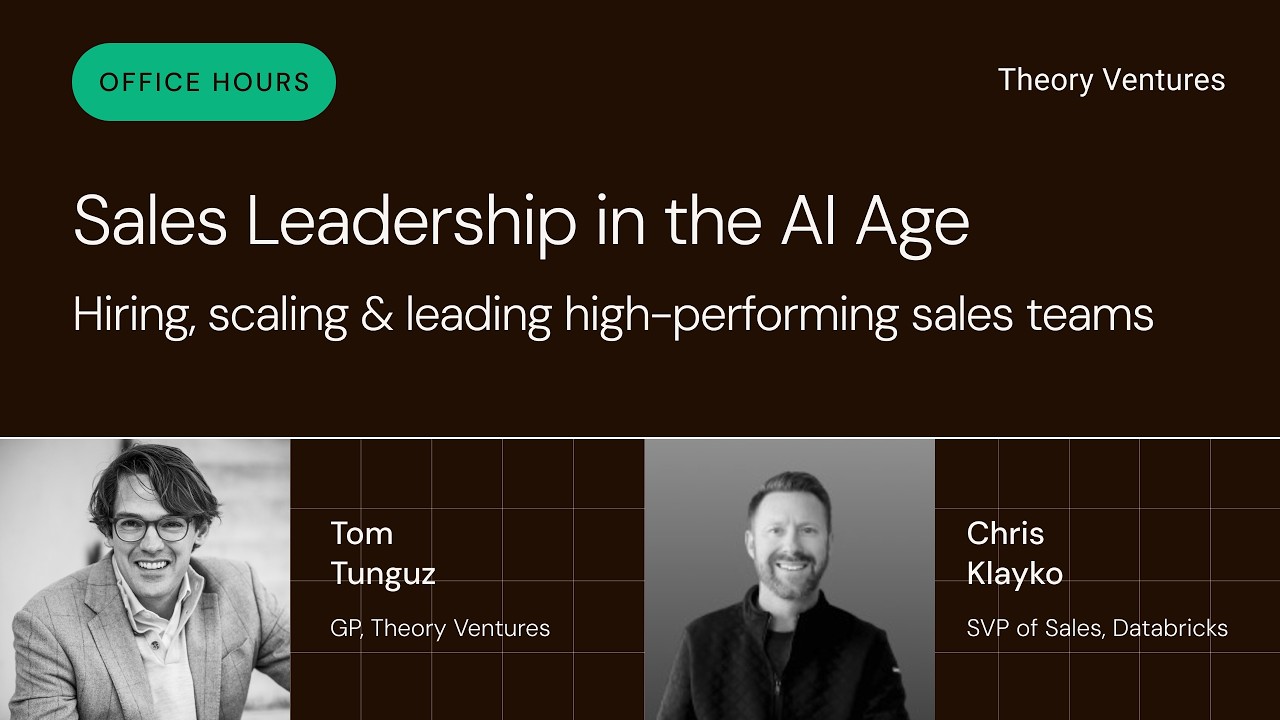
In a consumption business, signing the contract is the beginning of the sales motion. Chris Klayko, SVP of Sales at Databricks, joins Tomasz Tunguz on Office Hours to discuss how leaders build teams around ongoing customer adoption. Drawing on his experience with consumption models, Chris explains the daily operating habits, technical fluency, and customer relationships that drive growth. He also shares where AI helps sellers prepare and learn, and where experienced managers still need to exercise judgment.
In our conversation, we discuss:
- Why consumption growth comes from a steady stream of workload wins
- How account executives stay involved through implementation and adoption
- Why technical fluency belongs alongside commercial and relationship skills
- How proactive cost optimization builds trust with customers
- When to separate new-account hunters from teams growing existing accounts
- Where AI helps with research, meeting preparation, and sales enablement
- How daily dashboards and consistent product-launch priorities keep teams focused
Three takeaways from this conversation:
1. Manage consumption as an ongoing customer outcome. Chris describes a model in which account executives remain responsible for growth after the initial agreement. New use cases have to reach production and keep delivering value. His daily dashboard surfaces changes in consumption, workloads that went live, and projects that slipped. When growth falls short, he works backward through pipeline, activity, and enablement to understand what needs attention. The operating rhythm follows customer usage throughout the quarter.
2. Help customers spend efficiently to earn the next workload. Chris recommends bringing customers cost-optimization ideas regularly, alongside discussions of value, budget, and the product roadmap. Reducing waste can strengthen the relationship and create room for additional use cases. That requires sellers who understand the technology and can connect consumption patterns to the customer’s business. The account executive’s job includes helping adoption succeed, not simply negotiating the initial commitment.
3. Use AI to improve preparation while keeping coaching close to the field. Chris sees practical value in account research, prospect prioritization, meeting summaries, and pitch practice. He is more cautious about automated judgments on complex enterprise deals, where qualitative context matters. Managers still need to observe sellers, coach them, and coordinate with product and marketing. AI can make those interactions better informed, while a consistent cadence of training, feedback, and launch priorities keeps the team moving together.
